
This was the last lesson before the Easter holidays, so I was hoping it would be something fun. Luckily, we were creating a game! Mark told us to create groups of 2 or 3 and create a game aimed at primary school students with an educational purpose to it. We were given access to all technology and resources on the fourth floor.
Creating the game was in a classroom so a formal setting, however it was informal learning because we were creating/playing a game and we accidentally learnt some new information.
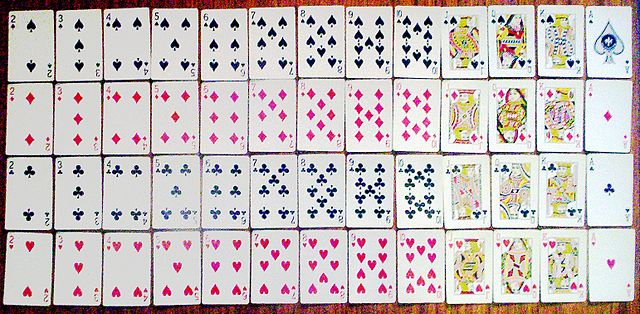
My group consisted of myself, Sidra and Neelam. We had decided to create a memory game using playing cards. Now, we didn’t have the playing cards, so we had to print them out. Already we experienced difficulties as the MAC computers are horrendous, therefore trying to get the images from google was an absolute headache. Even when we had finally got the images, it was hard trying to crop and edit it to make sure we got the cards we wanted.
The rules of the game were that 10 cards were set out on the table- one student per game. The student had to memorise the 10 cards set out on the table- the number, the suit and the colour- within a specific time frame. We had set the time to 30 seconds. Once the time is up, all 10 cards are turned over. The student is then given 15 cards in their hands, 10 of them being the same as the ones that are hidden. They had to place the cards below the ones that were turned over, which allows you to see how many cards they had memorised.
Now when we were creating the game we faced a few difficulties, as first, the editing of the images on Microsoft Word was quite hard. Secondly, when we were printing, the cards came printed the wrong way, so we had to scrap some of them. Creating the game was a lot more time-consuming then we thought because we had to wait for the printer to be available, then halfway through the paper ran out so we had to wait for Kath to come and re-fill. Once printed, we had to use the guillotine to cut out each card accurately. By the time we finished, the lesson was over, so we didn’t get time to actually play the game.
The way this game contributes to the learning of primary students is that it assesses the way learning and memory work together. Atkinson and Shiffrin discuss how learning is the ‘… acquisition of new information.’ and memory is ‘… the ability to recall information.’ (Hill, 2018). This shows how when the student has been presented the cards, they are learning new information- the sequence of the cards. As they try to memorise this, the information goes into their short-term memory.
Working with this group was good as we all understood each other and are already aware of each other’s strengths and weaknesses, therefore Neelam was assigned research and I was assigned doing the computer work. However, as we are too comfortable with each other, we took our time and talked a lot.
One other issue we faced was that the MAC computers were extremely slow. Luckily, we realised after a while that Neelam had her laptop, so we were able to create the game with a bit more ease.
Overall, I feel as though this was a good lesson to end on before the Easter holidays. It was a lot of fun going around and seeing how other people’s creativity led to them creating new and interesting games. I also liked the fact that we were given access to resources on the fourth floor. Being creative in Mark’s class allows for a lot more ‘chill’ environment and I appreciate the fact that he allows us to roam around to get whatever bits we need.